
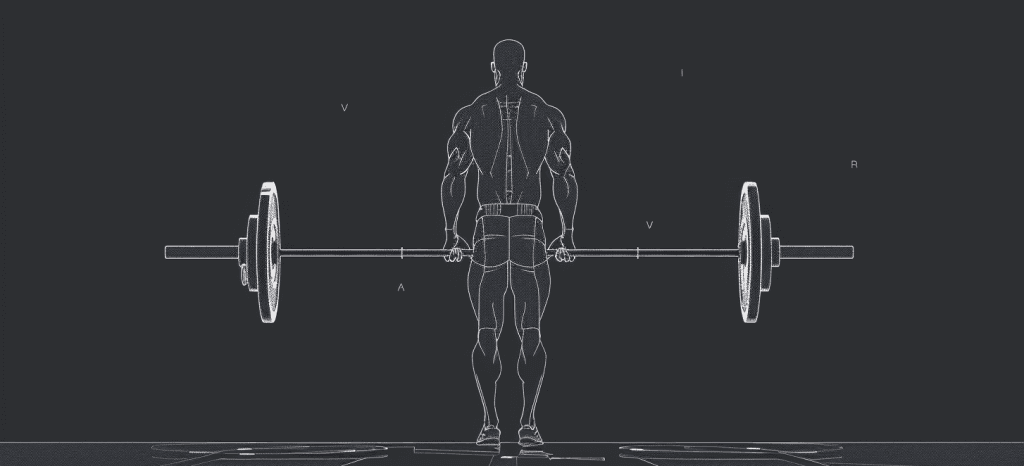
If you have ever filmed a lift or looked at yourself in the mirror and immediately started a mental spiral like, “My back is rounding, my knees are doing that weird thing, my shoulders look tilted, I am built incorrectly,” welcome to the club.
Most common form mistakes are not usually about you “having bad form.” Most of the time they come from one of three things, your setup is off, the load is too heavy, or fatigue is changing the rep, and that is great news because all three are fixable.
Get those right and most “form issues” calm down quickly. You did not suddenly become a different lifter, you just made the rep easier to execute well.
First, a reality check on “perfect form”
- There is no single perfect form that applies to every body, every limb length, every goal, and every lift variation.
- There is effective form, meaning the rep hits the target muscles, stays controlled, and does not produce pain.
- There is repeatable form, meaning you can do it consistently, not just on your best day when the stars align.
Chasing “perfect” often makes people stiff, hesitant, and afraid to add weight. That is a form problem too.
What Makes Reps Break Down
1) Setup problems (the most common one)
Most form issues start before the weight even moves. If your stance is wrong for your hips, your grip is off, the bar is too far from you, or you did not brace, your body will still complete the rep. It will just complete it with compensations. A good setup does a lot of the work upfront.
Common setup misses:
- Your feet are in a position that makes depth harder than it needs to be.
- You grab the bar, but you never create tension, so the first half of the rep is you finding the position.
- You rush the breath and brace, then wonder why you feel wobbly.
If you fix setup, you usually need fewer cues during the rep because the rep starts in the right place.
2) Load problems (your body is not lying to you)
If a weight is too heavy for the reps you are trying to perform, your technique will change. Technique changes under load because your body is trying to find something it can execute with the strength and control you have in that moment. A classic example is deadlift rounding. Sometimes it is a mobility or positioning issue, sure. A lot of the time it is simply, “This is heavier than you can control today.” If you need a dozen cues to get through a set, the weight is probably too heavy for what you are training. Use this test. If you drop the load 5–10% and your reps instantly clean up, it was the load.
3) Fatigue problems (form changes when you are cooked)
Even with a great setup and appropriate weight, your last reps will look different when fatigue hits. Muscles lose coordination, bracing gets sloppy, and your bar path gets less consistent. That does not always mean you did something wrong. It means you are human. The question is whether the fatigue is still producing controlled reps or whether it is pushing you into positions that feel unstable, painful, or unpredictable. If the last two reps look like a different exercise, you did not “have bad form,” you overshot the set.
Think of it this way, all day you make small calls, emails, traffic, work problems, meals, scheduling. None of it is a disaster on its own, so you keep moving and tell yourself you are fine.
Then at night one tiny thing happens. You cannot find the Tupperware lid, your kid forgot about a project due tomorrow, you found a small leak under the sink, and suddenly you feel way more frustrated than the situation “should” deserve.
It is tempting to blame that last tiny thing, but it was never about the lid. It was the accumulation. The last annoyance just exposed how drained you already were.
Training works the same way. That last ugly rep is easy to blame, like it is a sudden form failure. Most of the time it is the compounding fatigue from the earlier reps and sets. The final rep just makes it clear to see.
The 30-second form troubleshooting checklist
When a lift looks or feels off, run this in order.
- Setup
Did I pick the right stance, grip, and start position, and did I create tension before moving? - Brace
Did I take a real breath, lock the ribcage down, and keep tension through the rep? - Path and range
Is the bar moving where it should, and am I using a range of motion I can actually own? - Load
If I take 5–10% off, do I instantly look better? - Volume
If I cut one set, do I keep quality high across the workout?
Most people jump straight to step 47, “Maybe my glute medius is asleep” and start a 10-step warmup to “wakeup” their glute. Could it be a muscle activation problem? It absolutely could. But more often than not it, the problem was step 1, “Move your feet half an inch.”
Three common “form issues” and what they usually are
Squat: knees cave, heels lift, torso folds
This is often one of these:
- Stance is wrong for your hips, too narrow or too wide.
- Depth is beyond what you can control right now.
- You are wearing squishy shoes.
- You are losing brace, then your body finds depth by folding.
Fast fixes that usually work:
- Adjust stance slightly and try toes a bit more out.
- Use a controlled tempo, stop one inch above the point where you lose position.
- Switch to a heel-elevated squat variation. Lower the load and rebuild clean reps.
Deadlift: back rounds, bar drifts, you “yank” it off the floor
This is often one of these:
- Bar starts too far away from your shins.
- You start loose, then try to “rip” the bar up.
- Hips are too low, then shoot up, then your back finishes the lift.
- The load is too heavy for your current control.
Fast fixes that usually work:
- Start with the bar closer and bring your lats on, think “squeeze armpits.”
- Pull the slack out of the bar before the lift.
- Use a pause one inch off the floor to force control.
- Drop 5–10% and keep every rep identical.
Pressing: shoulder pain, flared ribs, elbows feel weird
This is often one of these:
- Ribs flare and the shoulder takes the load instead of the torso.
- Elbow path is too far out or too far tucked for your structure.
- You are pressing without stable shoulder blades.
- Range is too deep for your current shoulder tolerance.
Fast fixes that usually work:
- Lock the ribcage down and exhale gently before you press.
- Adjust elbow angle slightly and test what feels strongest.
- Use a floor press, incline, or neutral-grip variation.
- Reduce range, then rebuild it slowly.
Cues, use fewer, not more
One cue per set is usually the move. Pick the cue that fixes the biggest leak and run it for that set, then reassess. If you try to stack five cues at once, your brain turns into a browser with 37 tabs open and none of them are loading, and the lift gets worse, not better. Keep it simple and specific.
- For squats, something like “tripod foot” or “ribs down” is often enough.
- For deadlifts, “bar close” or “pull the slack” cleans up a lot fast.
- For pressing, “ribs down” or “stack wrist and elbow” tends to get people out of the weird, cranky positions and back into a strong rep.
Need Help Dialing This In?
If you want a clear plan and a starting point that actually fits you, book a free 1:1 assessment with us at Pure Function. It’s a general check-in on your goals, training history, and what your body needs right now, and you’ll leave with the next steps to train smarter. Grab your spot here.
The bottom line
Most form problems are not mysterious, they are usually setup, load, or fatigue, and the fix is almost always more practical than people expect. Start by cleaning up the setup so you are not fighting the lift before it even begins, then choose a load you can control instead of a load you can survive, and finally manage fatigue so your last reps do not turn into a different exercise. That order saves you a ton of overthinking, keeps your joints happier, and makes progress feel repeatable instead of random. The simplest rule is this: clean reps build you up, sketchy reps beat you up. Train for the reps you can own, leave one or two in the tank more often than your ego wants, and you’ll get stronger without adding nagging pains to your routine.